Some links in this post are affiliate links. If you buy something through one, Life in Soft Colors earns a small commission and you pay exactly the same price. (It does not change what I recommend.) More on how that works.
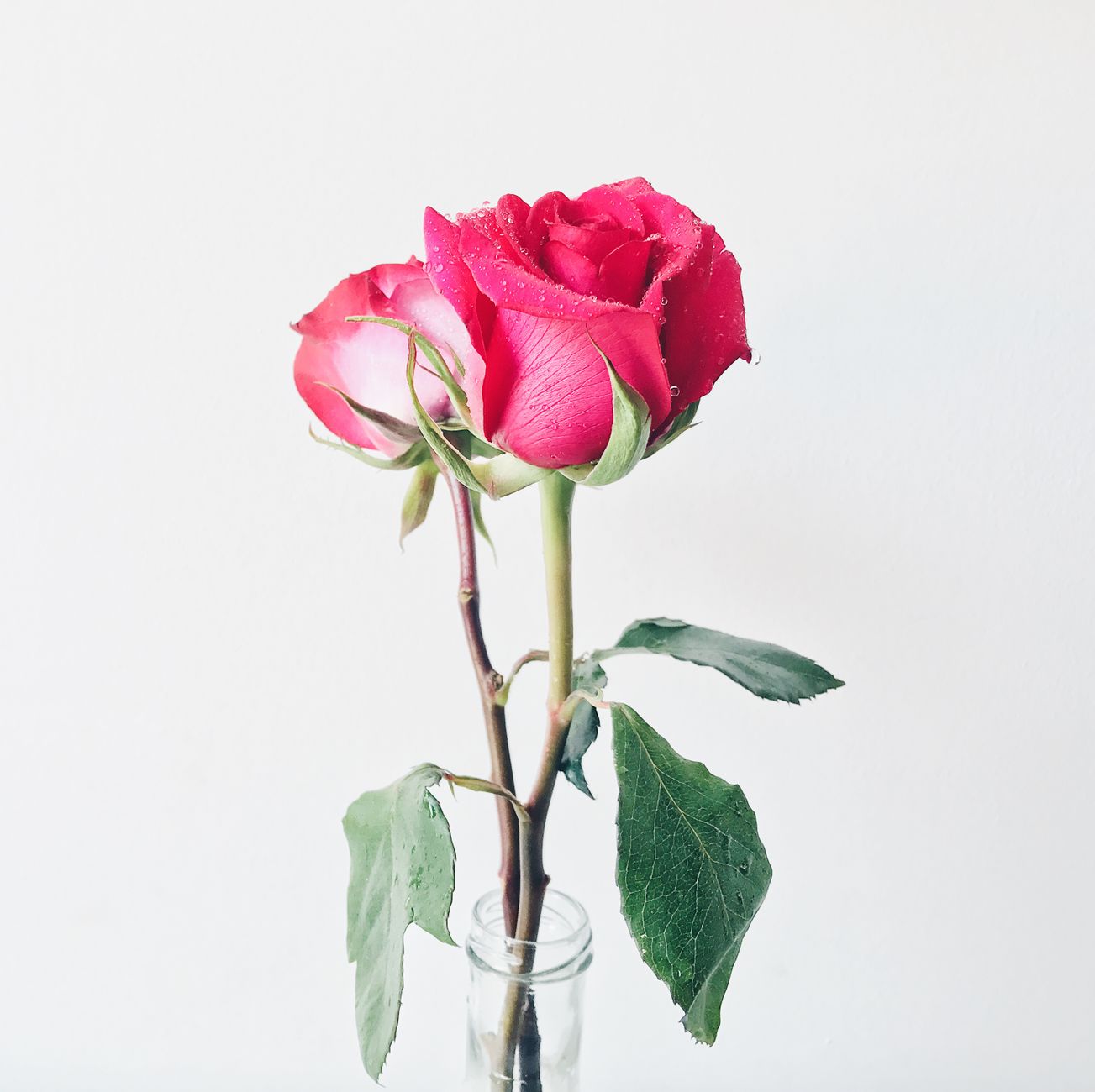
Every time I walk past a flower stand I have the same instinct, which is to buy the biggest, most colorful bunch they have. And every time I bring one home, it overwhelms my kitchen table in a way I did not expect. A big mixed bouquet is its own event. It wants attention, it wants a large vase, and it kind of insists that the rest of the room organize itself around it. That is not a bad thing, but it is not what I usually want. Most days what I want is one flower. Maybe two. In a small jar, on a shelf, doing a much quieter job.
This is the single flower rule, and it is less a rule than a habit I fell into after noticing how differently a room reads depending on how much color you give it permission to hold.
Why one stem reads differently than a dozen
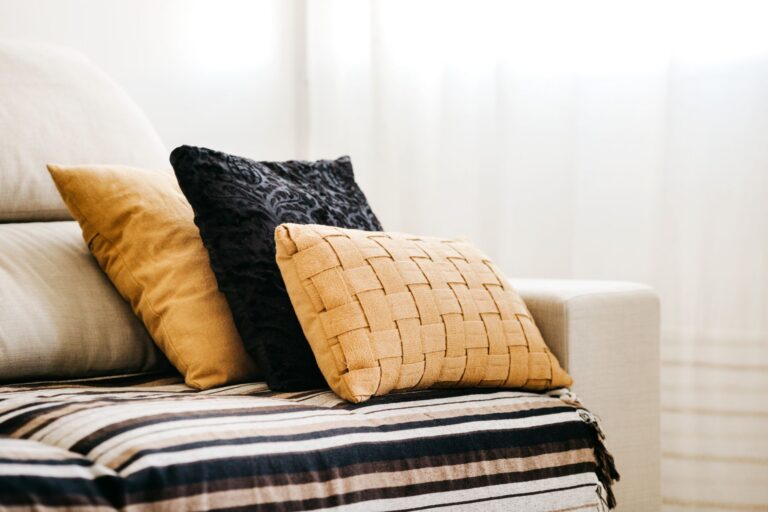
A full bouquet is a color statement all on its own. Pink and green and maybe some white, all clustered together, taking up real visual space. Your eye has plenty to do just processing the bouquet itself. But a single stem, especially something with a strong, saturated color like a deep pink ranunculus or a single orange poppy, works more like the pillow I wrote about in another post. It becomes a focal point precisely because it is alone. There is nothing competing with it, so your eye goes straight there.
I keep a small collection of little jars and bud vases around my apartment now, most of them thrifted, none of them matching on purpose. A single stem in one of these on a windowsill or next to the sink does more for the room than a big arrangement would, and it costs less too, since you are often only buying one or two stems instead of a whole bunch.
Where to put it
Small-dose color needs a quiet background to actually register, so think about where in your home has the least going on visually. For me that is the kitchen windowsill, which is otherwise just white tile and a wood cutting board. A single stem there catches the morning light and is basically the first color I see when I walk in.
- Bathroom counters work well because bathrooms tend to be small, neutral, and low on other objects competing for attention.
- A nightstand, especially if your bedroom leans toward soft whites and grays, is another good spot. It is the last thing you see before turning off the light.
- Next to the stove or on an open shelf in the kitchen, somewhere you will actually look at it while doing something else, tends to work better than a spot you only glance at in passing.
Avoid putting a single stem somewhere already busy, like a shelf full of books and framed photos. It will get lost, and the whole point is for it to be the thing that stands out.
Choosing which flower, and why the color matters more than the type
I am not precious about which flower it is. A grocery store carnation dyed a strange but pretty shade of coral has done the job just as well as something from an actual florist. What matters more is the color relative to the room it is going into.
If your space is mostly warm neutrals (cream, tan, warm wood), a single stem in a warm color like coral, rust, or a deep golden yellow tends to feel like it belongs. If your space leans cooler, with grays and whites and maybe some black accents, something in a cooler pink or a deep plum can do the same job without clashing. This is not a strict rule, just something I have noticed works more often than not.
One flower cannot clash with anything, because there is nothing else in the frame for it to clash with.
That is actually the appeal for people who feel nervous about color. You cannot really get it wrong with a single stem, because the stakes are so low. If it does not work, you have spent a few dollars and a few minutes, and tomorrow it can be a different color entirely.
What happens when the flower fades
Here is the part nobody tells you about small-dose color with real flowers: it is temporary by nature, and that turns out to be part of the appeal rather than a drawback. A single stem might last five days, maybe a week if you are lucky and change the water. Then it is gone, and you either replace it or let the jar sit empty for a while.
I used to think this was a downside compared to something permanent like a painted wall or a piece of art. Now I think it is the opposite. It means the color in my kitchen changes with the seasons without me doing anything different. In late summer it might be a single dahlia in deep red. By fall it is often something in a burnt orange. I am not planning this out on a calendar. I am just buying whatever looks good that week, and the room shifts along with it.
If you do not want to buy flowers every week
Not everyone wants to keep up with fresh stems, and that is fair. A single dried flower, or even one good stem of a hardy plant that lasts weeks without much care, can do a version of the same job. The color will be more muted with something dried, softer and a little dusty, which is its own kind of nice. It just will not have quite the same punch as something fresh and saturated.
Either way, the underlying idea stays the same. You do not need an arrangement to bring color into a room. You need one stem, one jar, and a spot quiet enough that it gets to be the thing your eye notices first.