Some links in this post are affiliate links. If you buy something through one, Life in Soft Colors earns a small commission and you pay exactly the same price. (It does not change what I recommend.) More on how that works.
Fresh flowers get all the attention, and I get it, they are the showy ones. But I have started paying more attention to what happens after. Dried flowers do not just lose water. They lose their original color and pick up a completely different one, and that new color is often softer and stranger and, honestly, more interesting than what they started with.
Pink does not just fade, it turns into something else
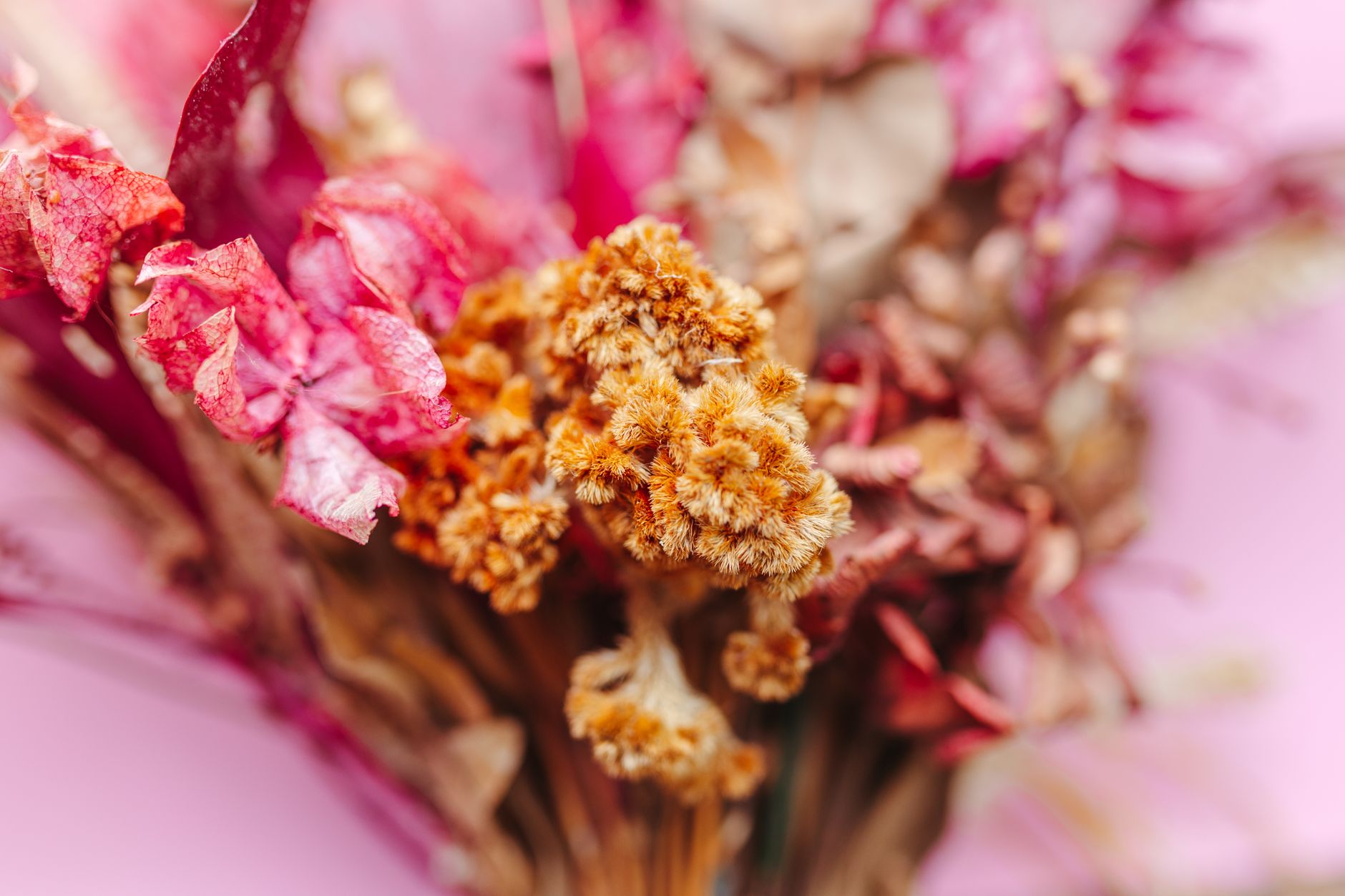
I dried a bunch of pink roses last spring, mostly because I felt bad throwing out a bouquet that still looked half decent. I expected them to just get paler. That is not really what happened. They went through this whole shift, from bright pink to a dusty rose, then to something closer to terracotta at the edges of the petals, with a little bit of brown creeping in from the outer layers inward. By the time they were fully dry, they were not pink anymore in any way I would have predicted. They were this warm, clay-adjacent color that honestly worked better with my apartment than the original pink ever did.
That is the thing about dried flower color that I did not expect: it is not a washed-out version of the fresh color. It is a different color family altogether, usually shifted warmer, toward rust, clay, and caramel tones, no matter what the flower started as.
Hydrangea does the opposite of what you’d guess
Fresh hydrangea, especially the blue or purple kind, is one of the most saturated colors you can bring into a house. I figured drying it would just mute that down evenly. Instead, the color breaks apart unevenly. Some petals go a soft sage green, some hold onto a dusty lavender, some turn a pale wine color, all on the same stem. You end up with this multi-tone effect where no two hydrangea heads dry exactly the same, even from the same plant.
I actually think this makes them more useful for a soft palette, not less. A single dried hydrangea head can bridge a green room and a lavender room because it is quietly doing both colors at once. I have used the same stem in two different corners of my apartment for that exact reason.
Statice keeps its color better than anything I have tried
If you want a dried flower color that barely shifts, statice is the one. It comes in these papery little clusters, usually in muted purple, soft yellow, or white, and it holds its original tone almost exactly, even months later. I have a jar of the purple kind that has been sitting on my shelf for close to a year and it still reads as a soft lavender-purple, not the gray-brown that most things eventually settle into.
This makes it useful if you actually want a specific color to stay put. Everything else on this list is a bit of a gamble. Statice is the reliable one.
Why everything eventually goes toward the same neutral
Here is a pattern I noticed after drying a handful of different flowers over the past year or so: no matter where they start, almost everything drifts toward the same narrow band of warm neutrals eventually. Give it long enough (a year, maybe two, depending on how much light it gets) and blues go gray, pinks go tan, purples go a dusty brown-mauve. It is like all flower color has a shared final destination, a sort of warm straw-and-clay neutral, and the bright fresh color is just a detour on the way there.
Once I understood that, dried arrangements stopped feeling like decorations that were “past their prime” and started feeling more like a different material entirely, closer to how I think about a piece of driftwood or a woven basket than how I think about a fresh flower.
A dried flower is not a flower that failed to stay fresh. It is a flower that finished becoming something else.
How light changes the color while it is drying
Where you dry something matters more than I expected for what color it ends up. I hung one bunch of larkspur in a dark closet and another bunch, same stems, same day, on a hook near a sunny window. The closet bunch kept much more of its original blue-purple. The window bunch bleached out fast and went almost silvery white within a couple weeks, with hardly any of the purple left.
So if you are trying to preserve a color on purpose, dry it somewhere dim. If you like the bleached, faded, almost ghost version of a color, hang it in the sun and let it go.
A short list of what to expect
- Roses: pink and red shift toward terracotta, rust, and eventually a soft brown
- Hydrangea: uneven, often breaking into sage green, dusty lavender, and wine tones on one head
- Statice: holds its original color the longest, especially purple and yellow
- Larkspur and delphinium: blue and purple bleach out fast in direct light, hold longer in shade
- Baby’s breath: goes from bright white to a soft, slightly yellowed cream
Why I keep a jar of dried stems around
Fresh flowers are lovely but they are also a countdown. I like having a jar of dried ones nearby precisely because the color has already finished changing. It is not going anywhere. What you see is what you get for the next year, easily, sometimes longer if you keep it out of direct sun. For someone who likes a settled, quiet color palette in a room, that stillness is actually the whole appeal. The color has stopped moving, and there is something calming about that.