Some links in this post are affiliate links. If you buy something through one, Life in Soft Colors earns a small commission and you pay exactly the same price. (It does not change what I recommend.) More on how that works.
I did not pick eucalyptus on purpose the first time. It came bundled into a grocery store bouquet, tucked around some carnations I actually wanted, and I almost tossed it. Then I got it home and noticed it was doing more work than the flowers were. That silvery, dusty green sat behind the pink and just made everything look calmer. I have been buying it on purpose ever since.
The green that is not really green
Most leafy greens read as, well, green green. Grass green, fern green, the kind of saturated color that announces itself. Eucalyptus is different. It has this blue-gray cast to it, almost like someone took a regular leaf and desaturated it by twenty percent. That is exactly why it slots into a soft palette so easily. It is not competing with your dusty pinks or your warm creams. It is speaking the same quiet language.
If you have ever wondered why a bouquet from a nice shop looks put together and one from the gas station looks like a fistful of color, the greenery is usually the answer. Bright, glossy filler leaves fight with pastel blooms. Silvery, matte ones support them.
Silver dollar versus seeded versus baby blue
Not all eucalyptus is the same, and it took me embarrassingly long to figure this out.
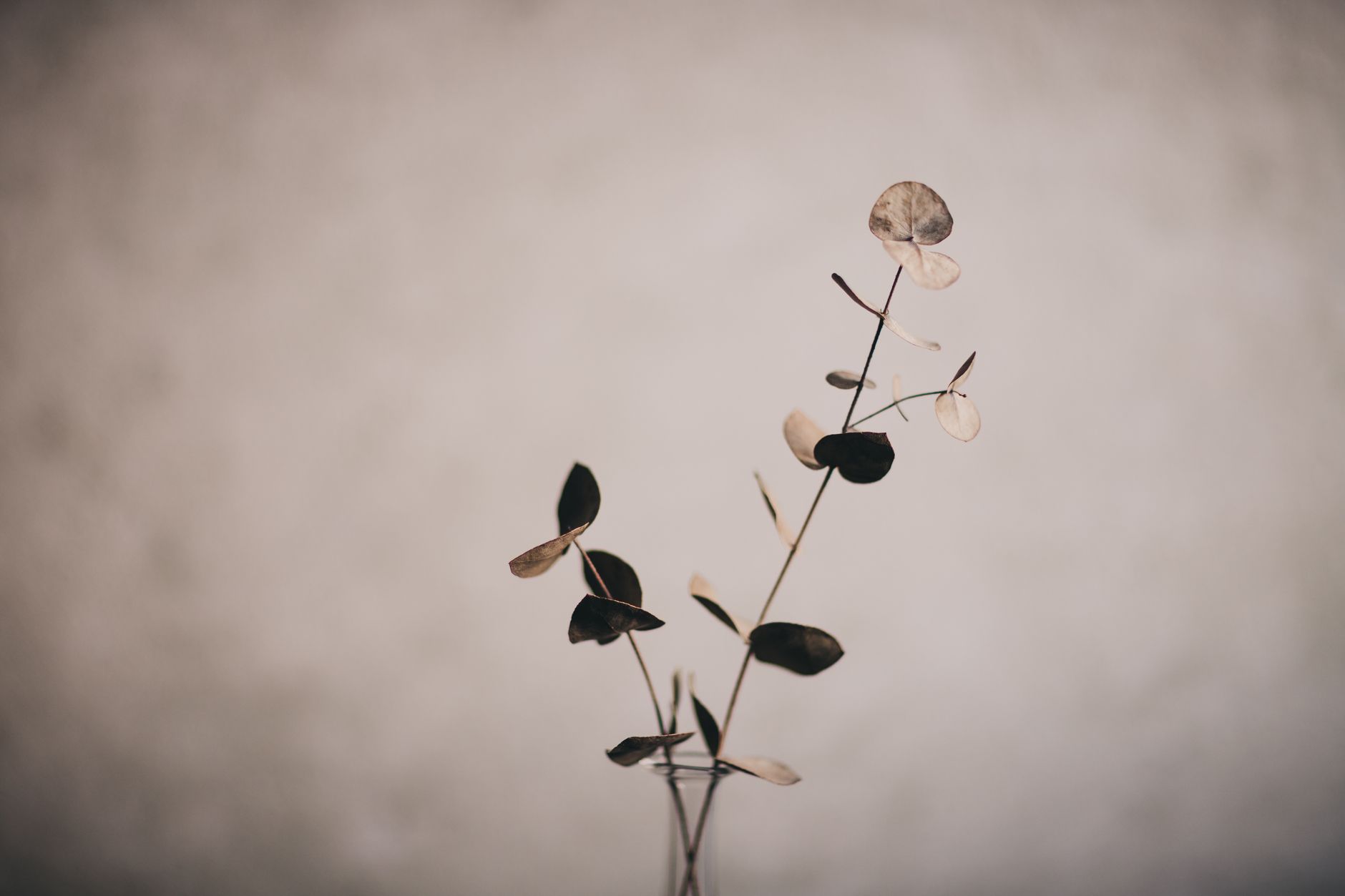
- Silver dollar eucalyptus has round, coin-shaped leaves and the most obvious blue-gray tone. This is the one that photographs the best against a warm neutral wall, in my experience.
- Seeded eucalyptus has these little round seed pods along thin stems instead of big round leaves. It is airier, more textured, and honestly my favorite for a loose, undone kind of arrangement.
- Baby blue eucalyptus is smaller-leafed and a bit more delicate looking, with a color that leans slightly more blue than gray to my eye.
They all read as “soft green” from across a room, but up close the differences matter if you are trying to match something specific, like a throw pillow or a piece of art.
Where the color actually shows up best
I have learned that eucalyptus does not do much for you in a bright white room with lots of natural light bouncing everywhere (the color kind of washes out, and it just reads as “green”). It comes alive against warmer, dimmer backdrops. A terracotta wall. A wood dining table. A linen tablecloth in oatmeal or clay. Put a few stems in a plain glass jar on a table like that and the gray-green really separates itself from everything around it, instead of blending into a generic green blur.
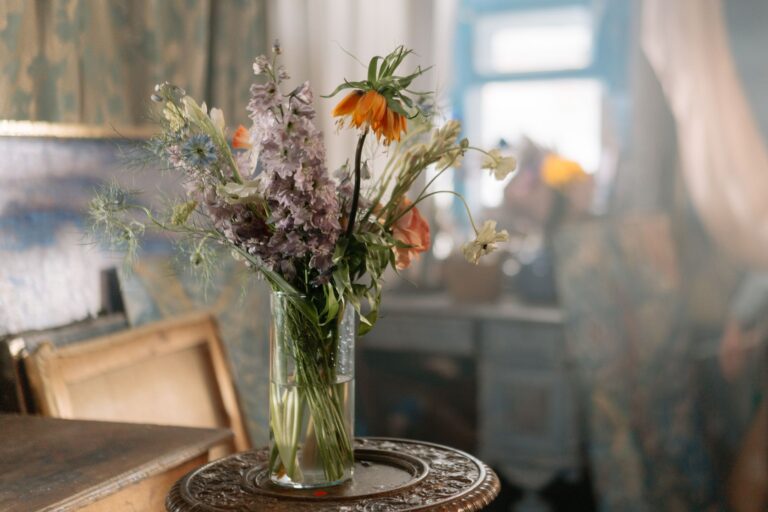
It also does something interesting next to blush or dusty rose. I put a small bundle in with some faded pink ranunculus once (more on those below) and the two colors just sat together so comfortably. Nothing was fighting for attention. It felt like they were dressed by the same person.
Dried is a whole different color story
Fresh eucalyptus is that blue-gray I have been describing. But if you let it dry out (and it dries beautifully, no special effort required, just hang it upside down and forget about it for a couple weeks), the color shifts. It goes more olive, more brown at the edges, sometimes almost a soft khaki depending on the light in your house and how long you let it go.
I actually prefer the dried color for certain corners of my apartment. In my bedroom, which gets warm afternoon light, the dried stems look almost bronze by golden hour. In my kitchen, under cooler light, the same bundle reads more gray-green. Same plant, different color, depending entirely on where you put it. That is a good reminder that “soft green” is never just one fixed shade. It shifts with the light it is sitting in, the same way a paint chip looks different at 9am and 6pm.
The color of a leaf is never fixed. It is a conversation between the plant and whatever light happens to be in the room that day.
Pairing it without overthinking it
I used to feel like I needed a whole plan to put a plant in a vase. I do not anymore. My loose rule is: pick one soft, muted flower color (dusty pink, pale yellow, faded lavender) and let the eucalyptus be the neutral that holds it together. You do not need three kinds of greenery and four kinds of flowers. One good green and one or two flower colors is plenty, and honestly looks more considered than a bouquet stuffed with everything the shop had.
A few pairings that have worked for me, color-wise:
- Silver dollar eucalyptus with white or cream ranunculus, in a plain stone-colored vase
- Seeded eucalyptus with dried pampas grass, no flowers at all, just texture and tone
- Baby blue eucalyptus with a few stems of dusty blue delphinium, which sounds like it should be too matchy but somehow is not
The part where I admit it also just smells good
I am supposed to be talking about color here, and I will get back to it, but I cannot pretend the smell is not part of why I keep buying it. That said, the smell is not why it photographs so well on a windowsill next to a cream-colored mug. The color is doing that on its own. It is one of the only plants I know that looks intentional even when I have shoved it in a jar with zero styling effort, and that is really the whole appeal for someone like me who does not have a lot of patience for fussing over arrangements.
If you are trying to bring more soft, muted green into a room and you are not sure where to start, a bundle of eucalyptus from the grocery store is about as low-risk as it gets. Worst case, you spent a few dollars on something that smells nice. Best case, you notice how much calmer your whole table looks with that dusty gray-green sitting in the middle of it.