Some links in this post are affiliate links. If you buy something through one, Life in Soft Colors earns a small commission and you pay exactly the same price. (It does not change what I recommend.) More on how that works.
I used to think a bouquet had one color. The color it was when I bought it, or when someone handed it to me at the door, still a little damp from the shop’s cooler. That’s the color I’d match to a vase, match to a table, match to whatever I was trying to make look nice that week. And then I’d basically stop looking at it, because I figured the job was done.
Except a bouquet doesn’t hold still. It moves through colors the whole time it’s alive on your counter, and most of that movement is more interesting than the “fresh” stage everyone photographs.
Day one is not the palette, it’s the starting point
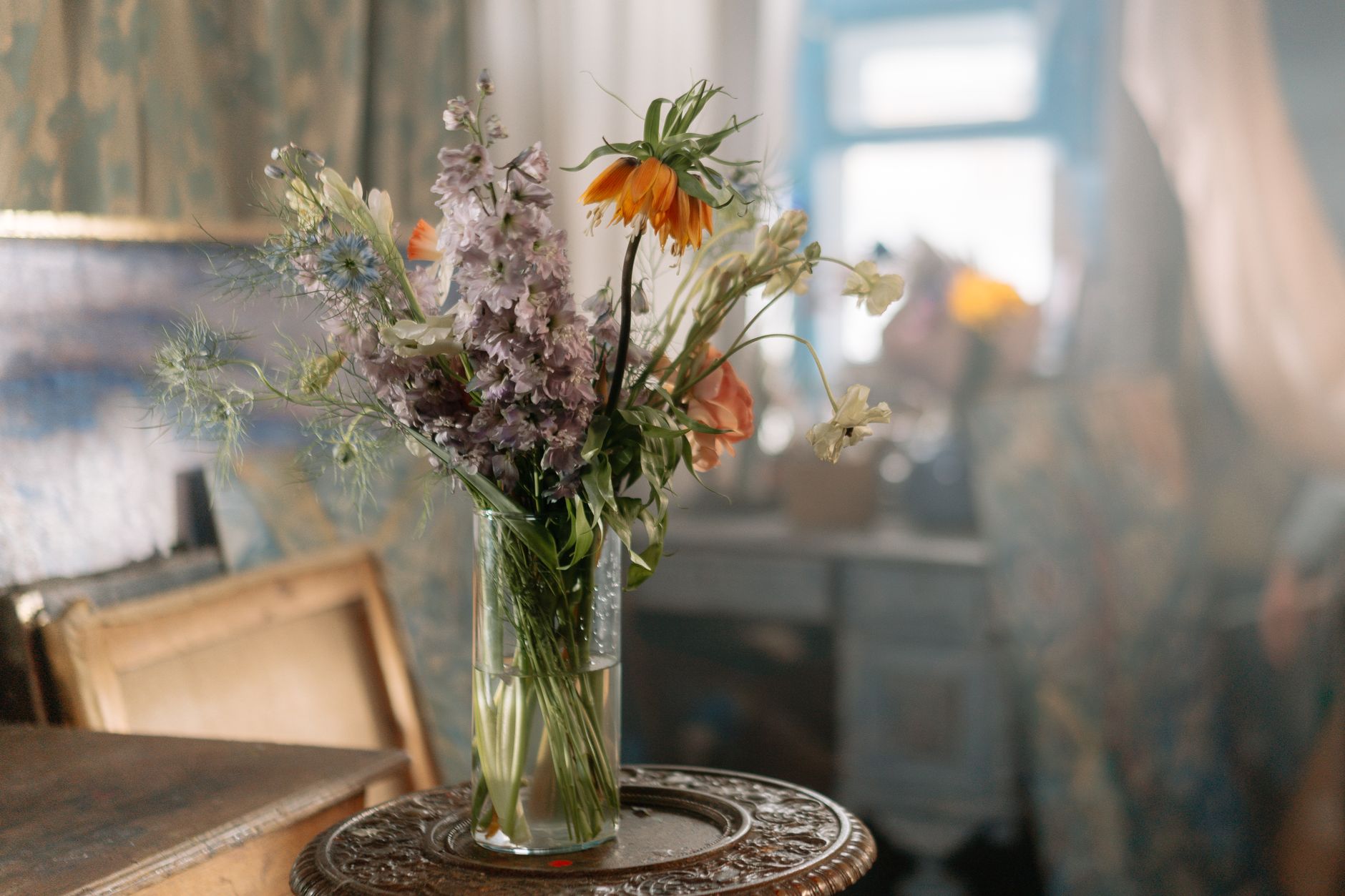
Day one flowers are saturated in a way that’s almost aggressive. A hot pink ranunculus on day one is genuinely hot pink, no apology. A orange tulip is loud. That’s the color everyone designs around, because it’s the color on the sleeve when you buy the thing, and it’s the color that shows up in the “how to style flowers” photos (which, notice, are always taken on day one or day two, never day eight).
But if you’re actually living with the bouquet instead of just photographing it once, day one is maybe fifteen percent of its life. The rest is a slow drift, and I think that drift is where the good color is.
The middle stretch is where things get soft
Somewhere around day three or four, the saturation starts letting go. Not fading exactly, more like the color is exhaling. A hot pink ranunculus doesn’t become pale pink overnight, it goes through this in-between stage where it’s dusty and warm at once, closer to a terracotta-pink than anything you’d find on a paint chip labeled “pink.”
This is my favorite stretch and I almost never see anyone talk about it. Tulips do something similar, they go from clean and glossy to a little papery, and the color gets a texture to it that it didn’t have when it was fresh (the petal surface changes, so the light bounces differently, so the color reads differently, even if the actual pigment hasn’t shifted much at all).
If you’ve got a mostly neutral room and you’re using flowers as your one hit of color, this middle stretch is honestly more forgiving than day one. The softened color sits into a room instead of announcing itself. I’ve had bouquets that clashed a little with my rug on day one and looked completely at home by day four, just because the color had mellowed into something closer to what was already around it.
What “going brown” actually looks like, color by color
Everyone says flowers “go brown” like it’s one flat outcome, but different flowers brown in completely different directions, and some of those directions are genuinely nice to look at.
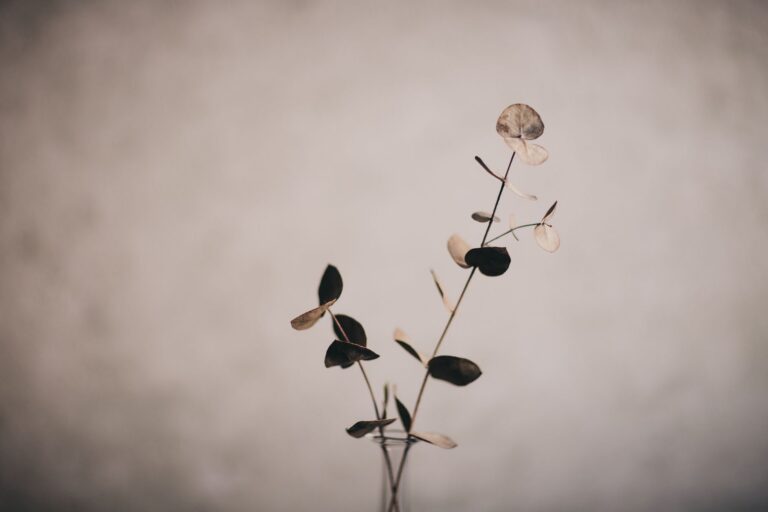
- White ranunculus and roses tend to go toward a warm parchment, almost the color of old paper. Not brown so much as aged-cream.
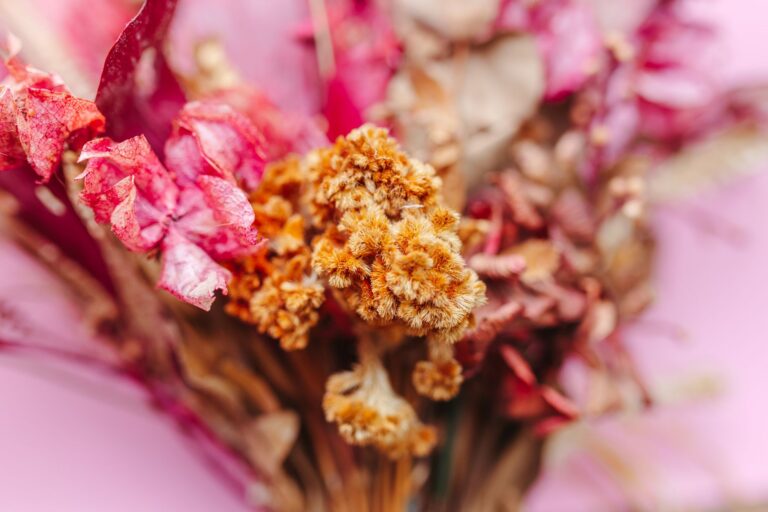
- Pink and red roses often go toward a dusty burgundy at the edges first, while the center holds onto more color longer, so you get a two-tone effect that never existed on day one.
- Hydrangea is the champion of this whole category. Blue and purple hydrangea heads shift toward a greenish, papery mauve that some people pay actual money for (dried hydrangea is its own thing, sold on purpose, at that stage).
- Yellow flowers, tulips especially, tend to go a little gray before they go brown, which is a stage I like more than I expected to. Muted, almost khaki-yellow.
- Purple statice and lavender barely change at all, which is part of why florists love them, they’re doing the “dried flower” color from day one without asking you to wait.
Knowing this ahead of time changes how I choose flowers now. If I want a bouquet that’s going to hold a bold color for the two weeks I’ll actually look at it, I lean toward the ones that fade slowly. If I want the drift, I pick the ones that shift fast and just enjoy watching it happen.
Season changes what “fresh” even looks like
The other piece nobody mentions is that the same flower can arrive at a different starting color depending on the season, mostly because of how it was grown and how far it traveled. Winter tulips, grown under artificial light and shipped further, often come in a touch more muted than the tulips you’d get from a spring farmers market table, which tend to be almost unreasonably saturated, like the color got dialed up.
Peonies in early summer are famously variable, the same variety can run from a soft blush to a much deeper rose depending on the week you catch them, and florists will tell you this is just what peonies do (it has to do with how the bloom opens and how much sun it got, apparently, though I’m not going to pretend I understand the horticulture of it).
I’ve stopped expecting a specific color from a specific flower name. “Blush peony” is a range now, not a swatch.
Letting the drift do some of the work
What changed for me is that I stopped treating the bouquet’s color as fixed on arrival. Now when I bring flowers home, I think about the room they’re going into and the two weeks ahead, not just the moment I set them on the table. If the fresh color is a little too loud for the space, I know the middle stretch will calm it down for me. If I want the saturated stage to last, I pick something that resists fading and just replace it before it drifts too far.
Either way, the vase of flowers on my counter is never really “done” being decided. It’s still choosing its own color, a little more each day, and I’ve gotten more out of paying attention to that than I ever got out of matching the day-one color to anything.