Some links in this post are affiliate links. If you buy something through one, Life in Soft Colors earns a small commission and you pay exactly the same price. (It does not change what I recommend.) More on how that works.
I have a friend who, once she discovers a color she likes, wants it everywhere. One yellow candle turns into a yellow throw blanket, which turns into yellow napkins, and within a month her whole living room has quietly become a shrine to a color that used to be a nice little accent. I get the impulse. If one dose of color feels good, more must feel better, right? Except that is almost never how it works out. There is a real point where small-dose color stops being small, and the effect you were going for disappears completely.
So how do you know where that line is? I do not think there is a hard number, but there are some signs I have learned to watch for, both in my own place and in friends’ homes I have helped talk through.
The one-item test
My rough personal guideline is one real accent color per room, in one main spot. Not one accent color per surface, not one per shelf. One, total, that gets to be the loud thing in that space. If I am looking around a room and I can point to three or four separate objects that are all doing color on their own, independent of each other, that is usually too many, even if none of them individually feels excessive.
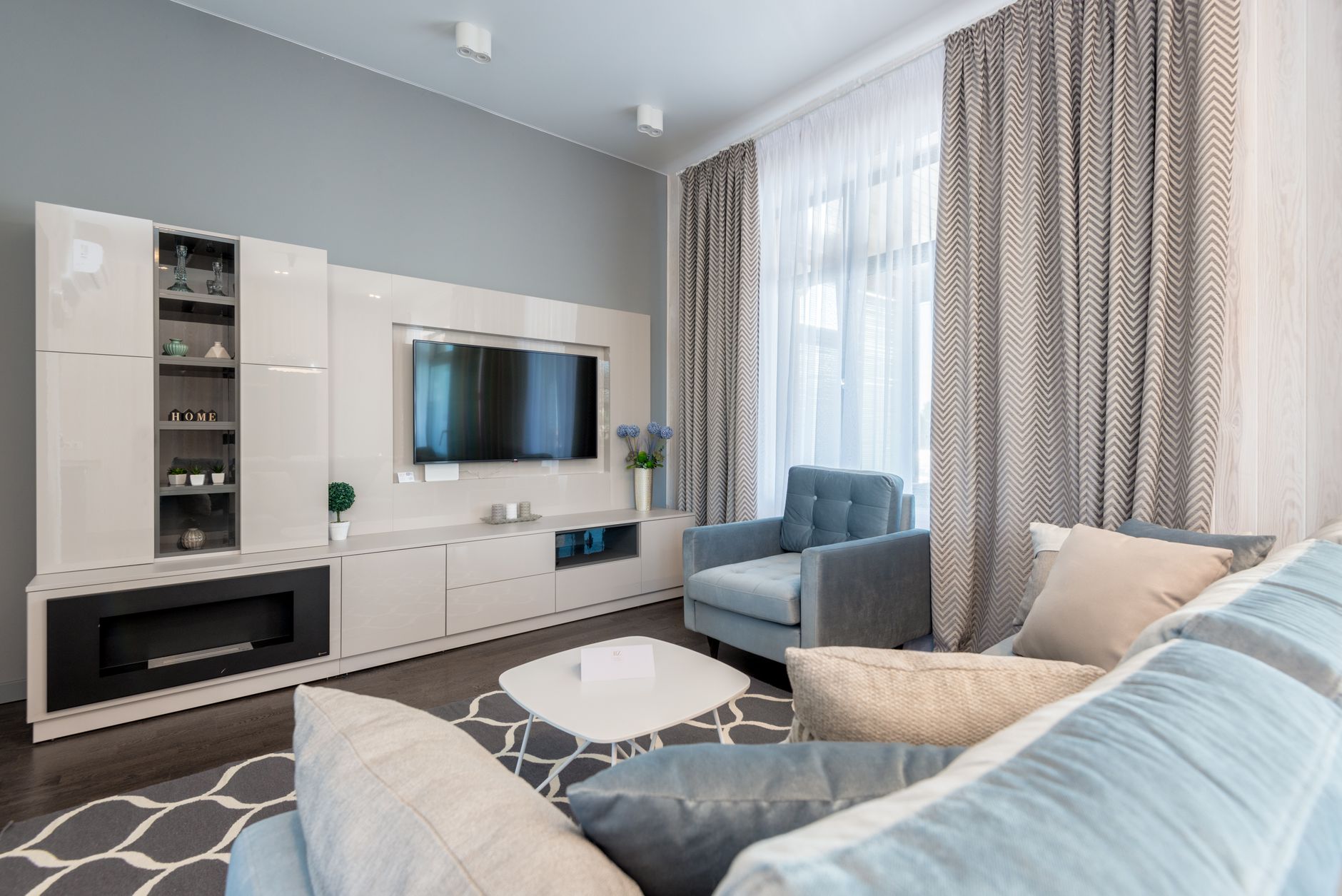
This does not mean everything else has to be pure white. Neutrals themselves have huge range, warm ivory, soft gray, deep charcoal, tan, and a room can have plenty of variation within that neutral family without breaking the one-accent rule. The rule is really about saturated, attention-grabbing color specifically, not about tone in general.
Signs you have crossed the line
A few things I have noticed, in my own home and in places I have visited, that tend to mean the accent has stopped being an accent.
- You can no longer tell your eye where to look first when you walk into the room. If everything is competing for attention, nothing actually wins, and the room can start to feel a little chaotic even if you cannot immediately say why.
- The color has started repeating in unrelated objects that do not talk to each other. A yellow candle near a yellow book near a yellow throw blanket, none of which were chosen together, tends to read as clutter rather than a considered choice.
- You stop noticing the color at all. This might be the biggest tell. The entire benefit of small-dose color is that it stands out. Once it is everywhere, your eye stops registering it as anything special, and it just becomes part of the background noise of the room.
It is not really about counting objects
I want to be careful here because I do not think this is a strict numbers game where three is fine and four is a crime. A large room can hold more color than a small one before it starts to feel like too much, simply because there is more neutral space to balance it out. A small bathroom with one colorful towel already feels different than a large open living room with one colorful chair, even though both are technically a single accent.
What matters more than the count is the ratio. If you stood back and squinted at the room, would color be the exception or would it be roughly half of what you see? Small-dose color, by definition, needs to stay the exception. The moment it becomes half the room, you have moved into a different style entirely, which again, is not wrong, just a different goal.
The job of a small dose of color is to be the one thing you notice. It cannot do that job if it has company.
What to do if you already have too much
If you read this and realized your home has slid from one accent color into several, you do not need to throw anything away. My actual advice is to pick your favorite of the bunch, the one object you would be saddest to lose, and let that be the accent going forward. Move the others to different rooms, store them away for a season, or give them to someone else entirely.
This is basically what I did with my own living room a while back. I had ended up with a rust pillow, a rust-colored ceramic vase, and a small rust-toned throw blanket, all in the same general area, all bought at different times without me really noticing the pattern. I kept the pillow, since it was in the spot my eye landed first anyway, and moved the vase to a bookshelf across the room where it could be its own separate moment instead of adding to a pile.
Trusting your own eye over a rule
None of this is meant to be a strict formula you have to follow exactly. The honest test is simpler than any rule I could write down: stand in the doorway of the room, look at it fresh, and notice where your eye goes. If it goes to one clear spot and rests there, you are probably in good shape. If it darts around trying to figure out what to focus on, that is usually the room telling you it has more color than it can comfortably hold.