Some links in this post are affiliate links. If you buy something through one, Life in Soft Colors earns a small commission and you pay exactly the same price. (It does not change what I recommend.) More on how that works.
At some point in my search for what my palette even was, I did what a lot of people do. I took the quizzes. The ones that ask you twelve questions about your favorite season or whether you’d rather have gold or silver jewelry, and then confidently spit out a label at the end, like “you’re a soft autumn” or “you’re a cool summer.” I took a lot of these. Enough that I should probably be embarrassed about it.
nn
The problem wasn’t that the quizzes were fun. They were fun. The problem was that I started treating the label as an answer instead of a starting point, and that’s where things went sideways for me.
nn
The quiz gives you a category, not a preference
nn
Here’s what I eventually noticed. A color quiz is designed to sort you into one of a handful of predetermined boxes. There might be four seasons, or twelve subtypes, or some other clever sounding system, but at the end of the day you’re being fit into a category that already existed before you answered a single question. Your actual, specific, personal preferences get flattened into whichever box is the closest match.
nn
That’s fine for a general starting point. It’s not fine as a final answer. I got told I was a certain category and then went out and bought things in that category’s “recommended” colors, only to feel weirdly unlike myself in almost all of them. The colors weren’t wrong exactly. They just weren’t mine.
nn
The questions are often about mood, not preference
nn
Go back and actually read the questions on one of these quizzes sometime. A lot of them aren’t really asking what colors you like. They’re asking things like “which of these words describes your personality” or “which season do you feel most like.” Those are interesting questions, but they’re proxies for color preference, not direct measurements of it.
nn
I don’t feel most like winter just because I’m a quieter, more introspective person. Feeling introspective and liking icy blues and stark contrast are two completely different things that the quiz was treating as the same thing.
nn
What actually worked better than any quiz
nn
Once I gave up on quizzes as the answer, I started paying attention to actual evidence instead of a personality proxy. This took longer, but it was so much more accurate.
nn
- n
- What I actually kept buying by accident, over and over, in small unplanned purchases
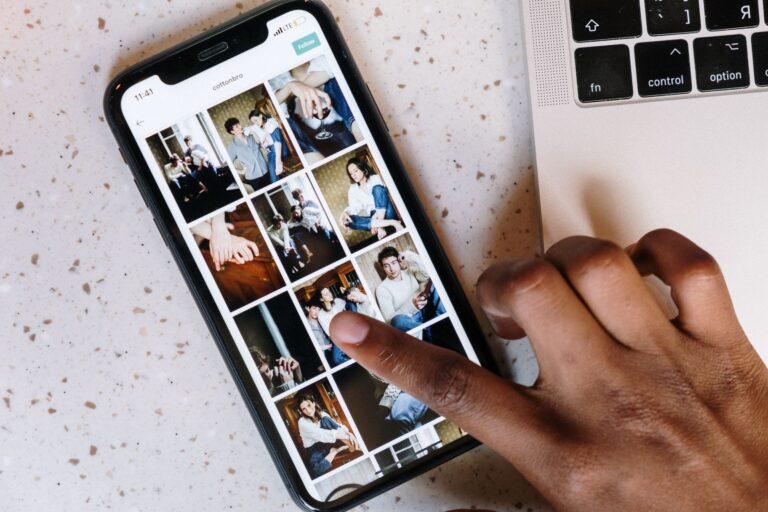
- What showed up repeatedly in years of camera roll photos I never meant as a color study
- What survived every closet purge instead of getting donated
- What I reached for first when given several similar options with no time to overthink it
n
n
n
n
nn
None of this required twelve multiple choice questions. It just required me to actually look at my own behavior instead of answering hypotheticals about my personality.
nn
Quizzes assume everyone fits a system
nn
Most of these color systems were built to sort people into a manageable number of categories, which makes sense for a business trying to sell you a capsule wardrobe or a makeup line. But real preference doesn’t always sit neatly inside a category built for mass use. I might genuinely love a color that isn’t supposed to belong to my assigned category at all, and that doesn’t make the quiz right and me wrong. It just means the category was too small to hold an actual person.
nn
A system built to sort millions of people into a handful of boxes was never going to know your specific, particular taste better than your own closet does.
nn
The confidence of the result is part of the problem
nn
What made the quizzes so convincing wasn’t accuracy, it was confidence. They don’t hedge. They don’t say “this is a rough guess based on limited information.” They tell you, flatly, you are this. And when something tells you flatly what you are, it’s easy to just believe it, especially if you weren’t that sure of your own preferences to begin with.
nn
I think that’s actually the appeal for a lot of people, myself included at the time. Not knowing your own palette feels a little uncomfortable, like you’re missing some basic piece of self-knowledge everyone else has. A quiz offers relief from that discomfort immediately, in about ninety seconds, with zero effort. Of course that’s appealing. It’s just not necessarily true.
nn
I still take them, just differently now
nn
I haven’t sworn off quizzes entirely, to be fair. They can be a decent starting point if you have genuinely no idea where to begin, sort of like a rough sketch before you fill in the real details. What changed is that I don’t treat the result as final anymore. If a quiz tells me I’m a certain category, I hold that loosely and check it against actual evidence, my closet, my camera roll, what I reach for without thinking.
nn
Usually the quiz gets something roughly right, like the general temperature (warm versus cool) while getting the specifics wrong. That’s useful information, just not the whole picture.
nn
Your evidence beats their algorithm
nn
At the end of the day, a quiz is working off of twelve answers you gave in under two minutes. Your closet, your camera roll, and your actual daily habits are working off of years of real, low stakes, unfiltered decisions. One of those data sets is obviously more reliable than the other, and it’s not the one designed to sort you quickly into a marketable label.
nn
If you’ve taken a quiz and it told you something that never quite felt right, trust that feeling. You’re allowed to be more complicated, and more specific, than any twelve question system was built to capture.